Skip to content

Introduction
One of the most common questions patients ask before starting treatment is simple:
It’s a fair concern. You’re moving your teeth — so naturally, people expect pain.
The truth is: Invisalign can feel uncomfortable at times, but it’s rarely what most people would describe as painful. In fact, compared to traditional braces, most patients find it significantly more comfortable.
In this guide, we’ll break down exactly what Invisalign feels like, when discomfort happens, and how to manage it — so you can start treatment with confidence.
Does Invisalign Hurt? The Honest Answer
Short answer: Mild discomfort, not pain
Invisalign works by applying gentle, controlled pressure to your teeth to gradually move them into position.
That pressure can cause:
- A feeling of tightness
- Mild soreness
- Slight sensitivity when biting
This is a sign the treatment is working, not a problem.
Most patients describe it as:
“Pressure rather than pain.”
When Does Invisalign Feel Uncomfortable?
1. When you first start treatment
The first few days are the most noticeable.
Your teeth aren’t used to movement yet, so you may feel:
- General soreness
- Pressure across multiple teeth
- Slight difficulty chewing
This usually settles within 3–5 days.
2. When switching to a new aligner
Each new set of aligners is slightly different, continuing the movement.
You may feel:
- Tightness when inserting trays
- Mild pressure for 24–48 hours
After that, your teeth adapt quickly.
3. If aligners rub against your gums
Occasionally, aligners can cause minor irritation where they meet the gumline.
This isn’t common, but if it happens:
- It’s usually mild
- It can be adjusted easily by your dentist
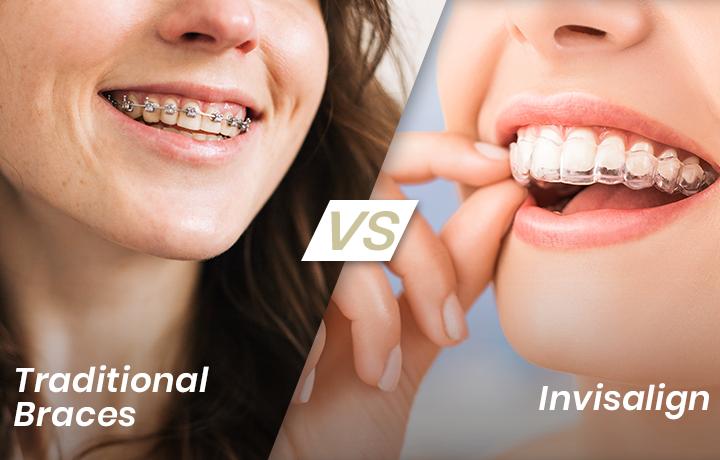
Invisalign vs Braces: Which Hurts More?
Invisalign is generally more comfortable than braces
Here’s how they compare:
| Factor | Invisalign | Fixed Braces |
|---|---|---|
| Pressure | Gentle, controlled | Often stronger, more forceful |
| Irritation | Smooth plastic | Brackets and wires can rub |
| Adjustments | Gradual tray changes | Tightening appointments can be uncomfortable |
| Emergencies | Rare | Broken wires/brackets can cause pain |
Key takeaway:
Invisalign spreads movement over time, making it more predictable and less intense than braces.
How Long Does Invisalign Pain Last?
Most discomfort is short-lived
- First aligner: 3–5 days
- Each new aligner: 1–2 days
- Overall treatment: occasional mild pressure
There shouldn’t be constant or severe pain. If there is, something needs checking.
What Does Invisalign Actually Feel Like?
Patients often struggle to describe it — so here’s the reality:
Common sensations
- Tight when putting trays in
- Slight ache when biting
- Pressure across teeth
- Awareness that something is “working”
What it shouldn’t feel like
- Sharp pain
- Throbbing discomfort
- Pain that keeps getting worse
- Pain that stops you sleeping
If you feel any of the above, your dentist should review your aligners.
How to Reduce Invisalign Discomfort
1. Switch aligners at night
Putting new trays in before bed allows you to sleep through the initial pressure.
2. Stick to your wear time (20–22 hours)
Inconsistent wear actually makes discomfort worse, as teeth don’t adapt properly.
3. Use over-the-counter pain relief if needed
Most patients don’t need it, but mild painkillers can help during the first 24 hours.
4. Eat softer foods at the start of each aligner
This reduces pressure when chewing.
5. Keep aligners clean and smooth
If edges feel rough, your dentist can quickly adjust them.
Is Pain a Sign Invisalign Is Working?
Yes — to a degree
That pressure you feel is the biological process of tooth movement.
However:
- Mild discomfort = normal
- Severe pain = not normal
A well-planned Invisalign case should feel controlled and manageable, not overwhelming.
When Should You Be Concerned?
Contact your dentist if you experience:
- Persistent pain beyond a few days
- Sharp or worsening discomfort
- Cuts or sores that don’t heal
- Aligners not fitting properly
At a practice like The Dental Article, aligners are carefully planned using digital scans and precise staging — meaning issues are rare and easily corrected.
Why Invisalign Is Still Worth It (Even If It Feels Strange at First)
It’s important to zoom out.
That short period of discomfort leads to:
- Straighter teeth
- Improved confidence
- Better oral health
- A long-term, stable result
And compared to braces, the journey is:
- More discreet
- More comfortable
- More flexible with your lifestyle
Final Thoughts: Should Pain Put You Off Invisalign?
No — it shouldn’t.
Invisalign isn’t completely sensation-free, but it’s designed to be:
- Gentle
- Predictable
- Easy to manage
Most patients quickly adapt and barely notice it after the first few days of each aligner.
If anything, the bigger regret tends to be:
“I wish I started sooner.”
Thinking About Invisalign in Manchester?
If you’re considering Invisalign and want honest advice about what to expect, the best next step is a consultation.
At The Dental Article, we use advanced 3D scanning and personalised treatment planning to ensure your experience is as comfortable and predictable as possible.